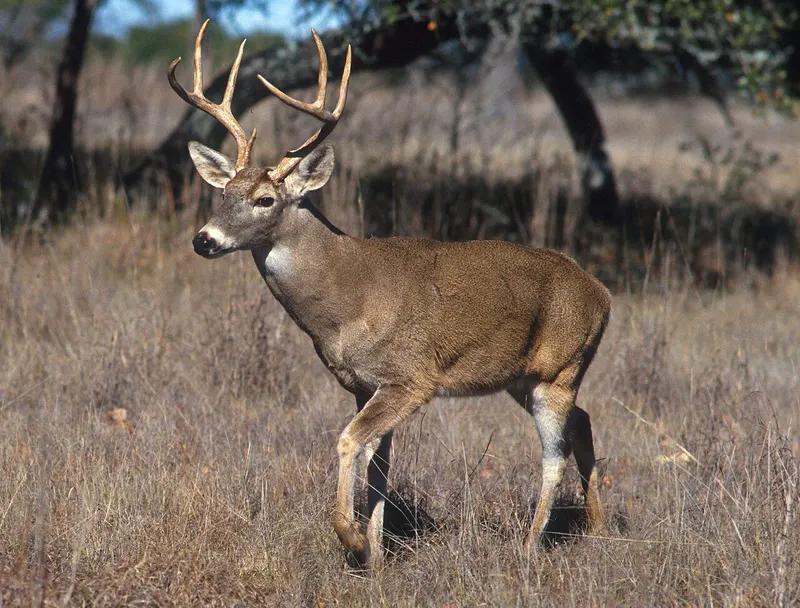
Where does the white-tailed deer live?
The white-tailed deer lives in North and South America, from Canada to Brazil. It is the most widely distributed mainland ungulate herbivore in the Americas. Highly adaptable, it inhabits many different ecosystems, from arid grasslands to the Amazon and Orinoco basins, from the Llanos to the high-elevation terrain of the Andes. In North America it is very common, even considered a nuisance in some areas, east and south of the Rocky Mountains. It has been introduced to many other countries, such as Finland, the former Czechoslovakia and New Zealand.
What does the white-tailed deer eat?
The white-tailed deer is a medium-sized herbivorous deer. Together with its natural predator, the mountain lion, it is one of the most widely distributed land mammal species in the Americas and in the world. A deer's age can be estimated from the length of its snout and the colour of its coat: older deer tend to have longer snouts and greyer coats.
Is the white-tailed deer endangered?
No: the IUCN lists it as Least Concern. But the westernmost population, the Columbian white-tailed deer, once widespread in the mixed forests of Oregon and Washington, is now considerably reduced and classified as Near Threatened. A population in New York is entirely white except for the nose and hooves, though not albino.