Where does the European polecat live?
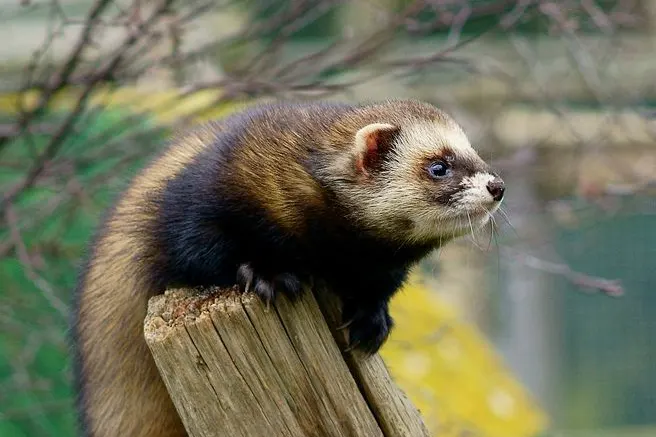
The European polecat lives throughout the European continent, as well as in the Rif mountains of North Africa. It is generally dark brown, with a paler underbelly and a dark mask across the face. It has a shorter, more compact body than other Mustela species, and a more powerfully built skull and dentition. Its tail is short, about one-third of its body length.
What does the European polecat eat?
It feeds on small rodents, birds, amphibians and reptiles. It occasionally cripples its prey by piercing its brain with its teeth and stores it, still living, in its burrow for future consumption. It is well known for secreting a particularly foul-smelling liquid to mark its territory. It is much less territorial than other mustelids: animals of the same sex frequently share home ranges.
Is the European polecat endangered?
No: the IUCN lists it as Least Concern. Like other mustelids, it is polygamous. It usually gives birth in early summer. Colour mutations occasionally occur, including albinos and leucists.