Where does the European bison live?
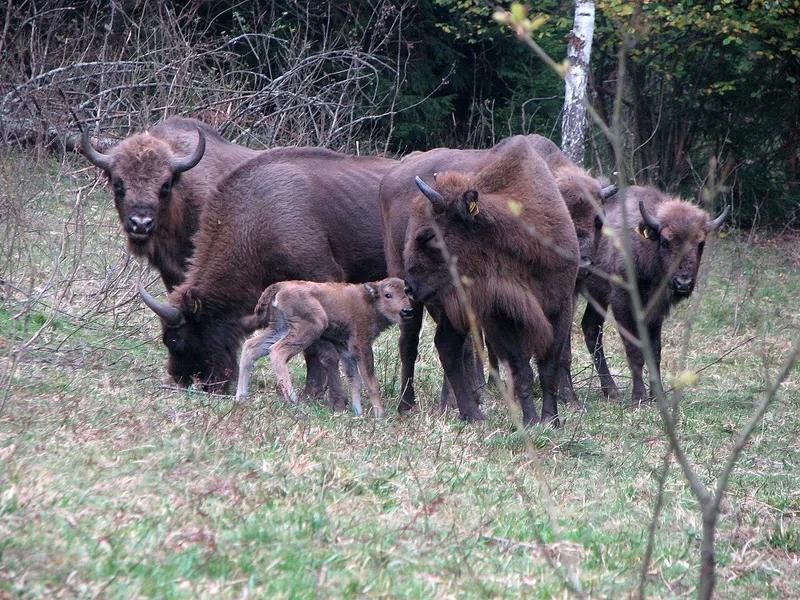
The European bison is the heaviest wild land animal in Europe. In late antiquity and the Middle Ages it became extinct in most of Europe and Asia, and survived into the 20th century only in northern-central Europe and the northern Caucasus Mountains. In the early years of the 20th century, the remaining bison were hunted to extinction in the wild. Since then, captive breeding programmes have returned it to the wild.
What does the European bison eat?
It eats mostly grasses, sedges and herbs, and also browses shoots, twigs, bark and leaves: an adult male can eat up to 32 kg a day in summer. The European bison is a herd animal, living in both mixed and male-only groups. The average herd numbers eight to 13 animals, and herds made solely of bulls are smaller, with two individuals on average. Herds are not family units. In the Białowieża Forest of Belarus and Poland, adult males weigh 634 kg on average and females 424 kg.
Is the European bison endangered?
The IUCN lists it as Near Threatened. By the late 2010s, the species numbered several thousand and had been returned to the wild by captive breeding programmes. It is no longer in immediate danger of extinction, but remains absent from most of its historical range. There were about 7,500 in the world in 2019, about 2,269 of them in Poland.