Where does the Siberian flying squirrel live?
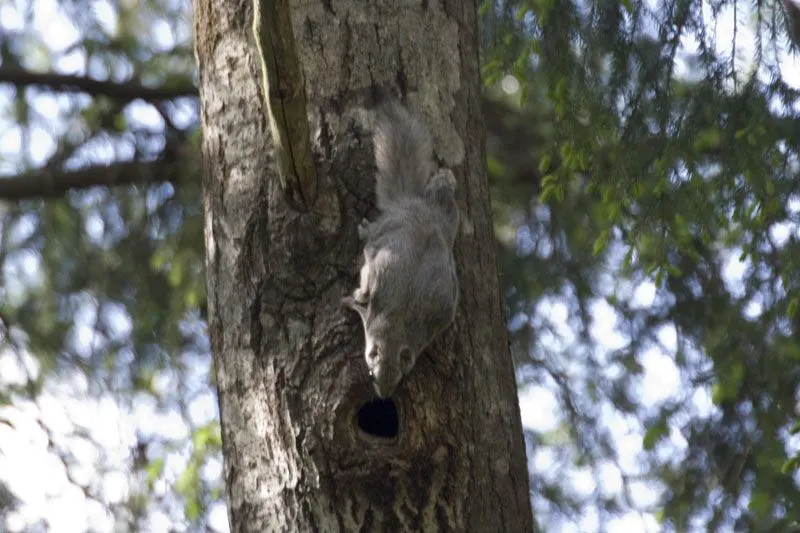
The Siberian flying squirrel is an Old World flying squirrel, ranging from the Baltic Sea in the west, throughout northern Asia, to the coast of the Pacific Ocean in the east. It is the only flying squirrel in Europe, where it is considered vulnerable in the European Union, since it occurs only in Estonia and Finland. It inhabits boreal forests and old spruce-dominated forests, and uses tree cavities for shelter.
What does the Siberian flying squirrel eat?
It eats leaves, seeds, cones, buds, sprouts, nuts and berries. It is primarily nocturnal. It can glide from tree to tree across distances of over a hundred metres. Its glide membrane, the patagium, is a furry flap of skin. It has large, strikingly black eyes and a grey coat, with a black stripe between the neck and the forelimb.
Is the Siberian flying squirrel endangered?
The IUCN lists it as Least Concern, but it is threatened in Europe by habitat fragmentation and loss of its forest habitat. In Latvia, it was last sighted in 2001 and has been considered locally extinct since 2013. A female weighs about 150 g, the males slightly less.