Where does the reindeer live?
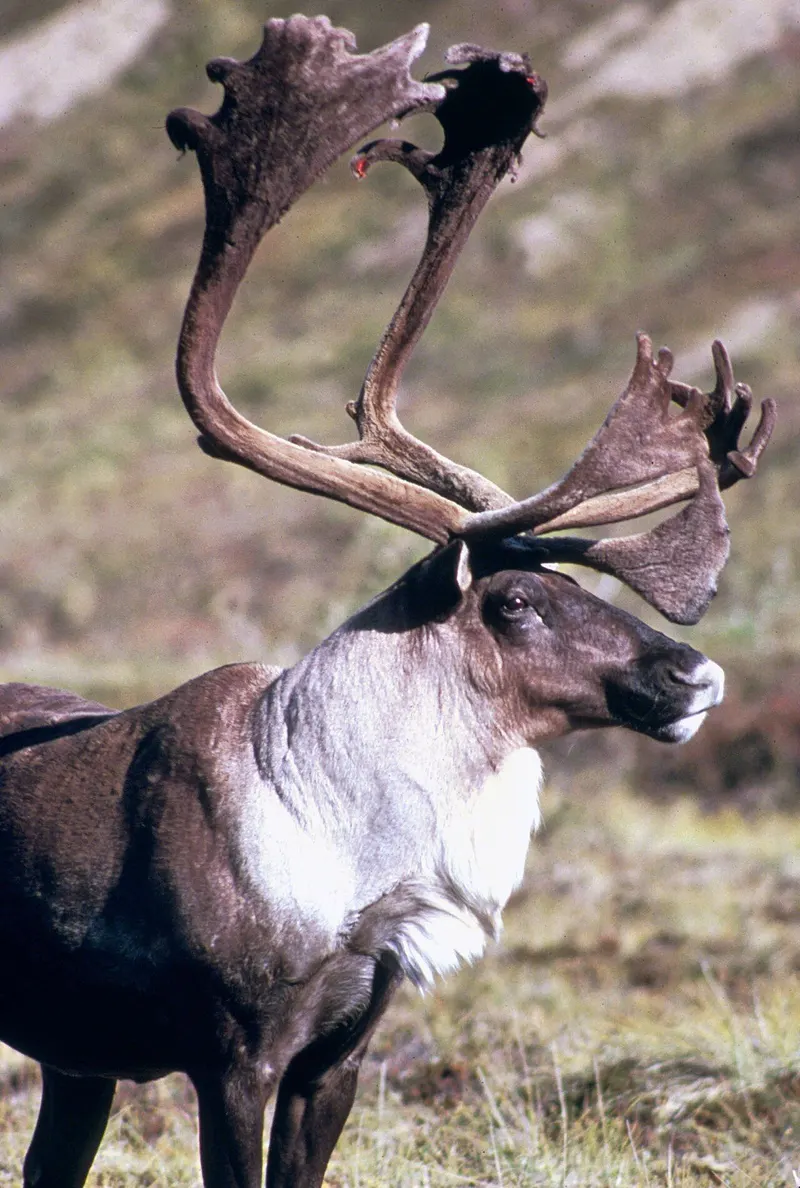
The reindeer, called caribou in North America, lives in the Arctic, subarctic, tundra, boreal and mountainous regions of Northern Europe, Siberia and North America. It has also been introduced to the Kerguelen Islands, where it now lives wild. There are both migratory and sedentary populations, and herd sizes vary greatly between regions. The tundra subspecies are adapted for extreme cold, and some for long-distance migration.
What does the reindeer eat?
Lichen is a primary food source, particularly in winter: it paws through the snow to reach the vegetation beneath. Both males and females can grow antlers each year. All caribou and reindeer in the world are the same species, with seven subspecies. They vary greatly in size and colour, from the smallest, the Svalbard reindeer, to the largest, Osborn's caribou. The reindeer has been domesticated, notably in Northern Europe and Siberia, where it is used as a draught, pack and riding animal. It is still herded and hunted today.
Is the reindeer endangered?
Yes: the IUCN lists it as Vulnerable. Although reindeer are quite numerous, some species and subspecies are in decline. The Taimyr herd in Siberia is the largest wild herd in the world, with between 400,000 and 1,000,000 animals. Siberian tundra reindeer herds have been in decline, but are stable or increasing since 2000. Several subspecies are extinct or declining: the George River herd in Canada collapsed from 800,000 to 900,000 in the 1990s to fewer than 9,000 in 2018.
All 71 threatened animals ›