Where does the North American river otter live?
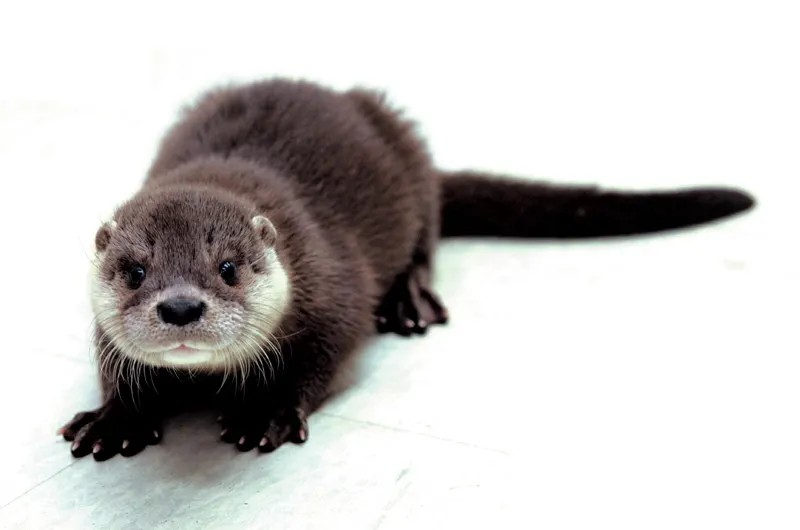
The North American river otter is endemic to the North American continent: it is found throughout most of Canada, along the coasts of the United States and its inland waterways. It establishes a burrow close to the water's edge in river, lake, swamp, coastal shoreline, tidal flat or estuary ecosystems. The den typically has many tunnel openings, one of which generally allows the otter to enter and exit the water. Females give birth there to litters of one to six young.
What does the North American river otter eat?
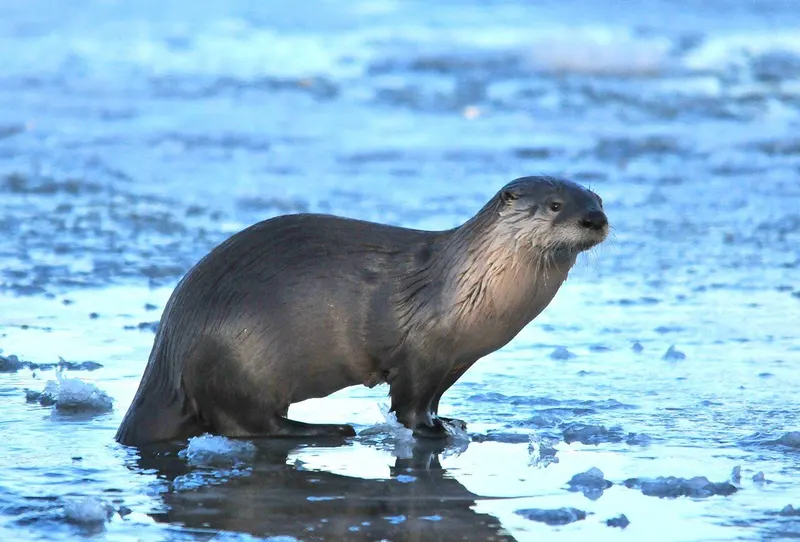
Like most predators, the river otter preys upon the most readily accessible species. Fish is a favoured food, but it also consumes amphibians such as salamanders and frogs, freshwater clams, mussels, snails, small turtles and crayfish. Its long, thin whiskers are used to detect prey in dark waters. It is equally versatile in the water and on land.
Is the North American river otter endangered?
No: the IUCN lists it as Least Concern. An adult weighs between 5 and 14 kg, the average male about 11.3 kg. A thick, water-repellent coat of fur protects and insulates it. Its body length ranges from 66 to 107 cm, and the long, tapered tail makes up about one-third of its total length.