Where does the muskrat live?
The muskrat is native to North America, where it is found in various wetlands and has crucial effects on their ecology. It was introduced to Europe at the beginning of the 20th century for fur farming, and has become an invasive species in north-western Europe. Since 2 August 2017, it has been on the EU list of invasive alien species of Union concern.
What does the muskrat eat?
Muskrats feed mostly on cattail and other aquatic vegetation, but also eat small animals. They spend most of their time in the water and can swim underwater for 12 to 17 minutes. They live in families made up of a male and female pair and their young. They build nests to protect themselves from the cold and predators, often burrowed into the bank with an underwater entrance.
Is the muskrat endangered?
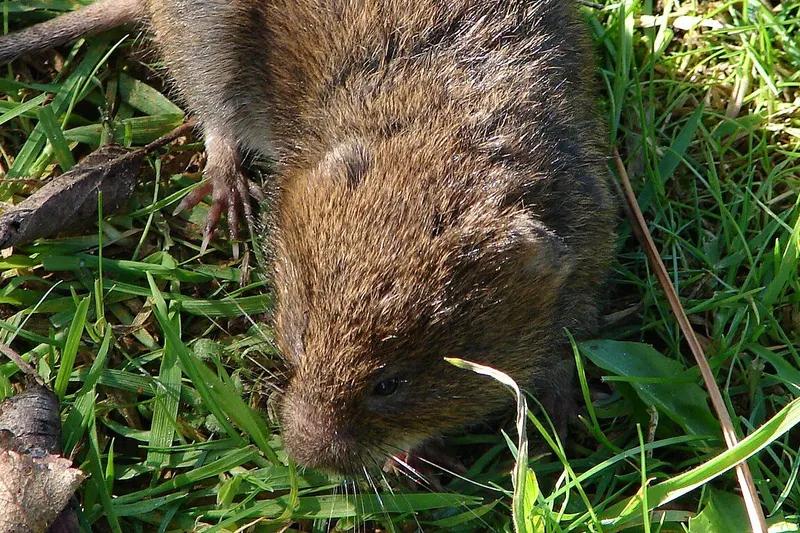
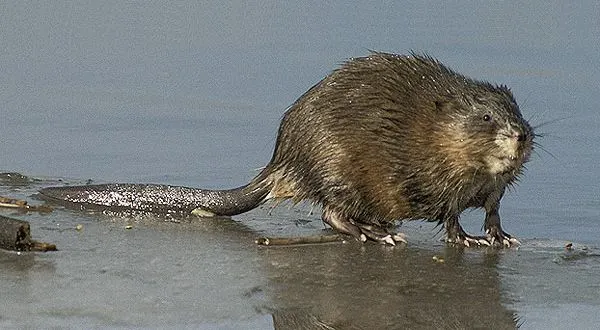
No: the IUCN lists it as Least Concern. It is a medium-sized semiaquatic rodent, weighing 0.6 to 2 kg, with a body length of 20 to 35 cm excluding the tail. Its short, thick fur is medium to dark brown. Its long tail, covered with scales and flattened from the sides, is mainly important for directional stability. In the wild it rarely lives beyond three or four years.