Where does the North American beaver live?
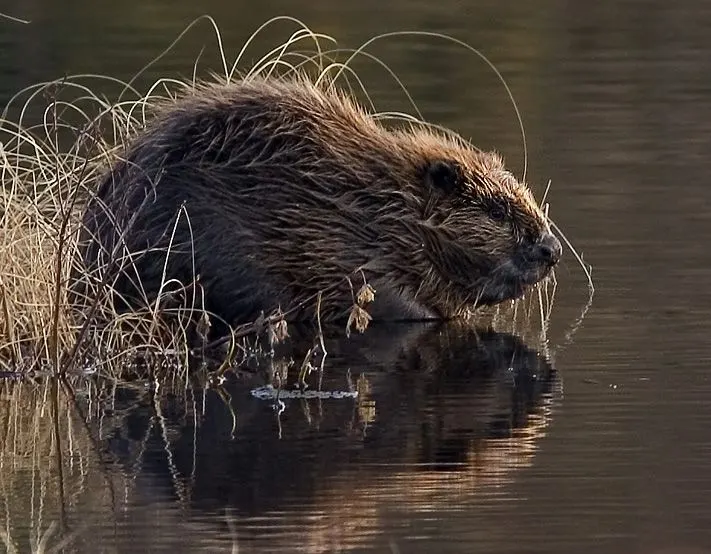
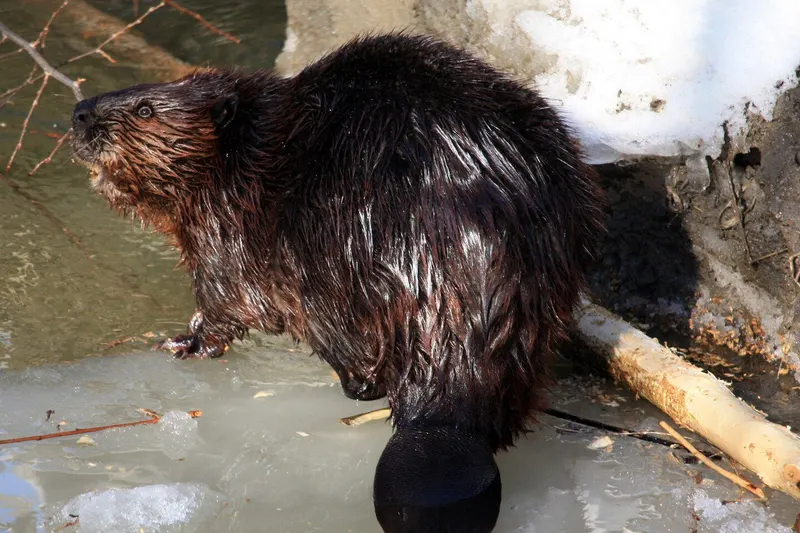
The North American beaver is a large rodent that lives near streams, lakes and ponds in North America, as far as northern Mexico. It is widespread across the continental United States, Canada and southern Alaska. It has been introduced to Patagonia and Europe, mainly Finland and Karelia. It is one of the national symbols of Canada. It disappeared from a large part of its range because of trapping.
What does the North American beaver eat?
The beaver feeds on bark, cambium, branches, twigs, roots, buds and leaves, preferring aspen and poplars, and in early spring cattails and water lilies. Its incisors never stop growing. It usually mates for life, and the young stay with their parents for up to two years. Its flat tail slaps the water to signal danger. The beaver builds its home, the lodge, out of sticks, twigs, rocks and mud, in lakes, streams and tidal river deltas. It may be surrounded by water or touching land, with burrows dug into river banks. It is well known for building dams across streams and constructing its lodge in the pond that forms. It first makes a pile of sticks, then eats out one or more underwater entrances and two platforms above the water surface.
Is the North American beaver endangered?
No: the IUCN lists it as Least Concern, but its populations declined sharply under pressure from trappers. An adult usually weighs 11 to 32 kg, with 20 kg being typical, and measures 74 to 90 cm long, with the tail adding 20 to 35 cm.