Where does the Lar gibbon live?
The lar gibbon, or white-handed gibbon, has the greatest north-south range of any of the gibbon species. It is found in Indonesia, Laos, Malaysia, Myanmar and Thailand, as well as in the north-west of Sumatra. Its range historically extended from south-west China to Thailand and then south through the whole Malay Peninsula, in primary and secondary tropical rain forests. In recent decades the continental range has been reduced and fragmented, and it is likely extinct in China.
What does the Lar gibbon eat?
It eats a great variety of foods, but is mainly a fruit-eater (66%). It tastes fruit and accepts or rejects it by ripeness, and returns to the same food sources several times in a season to find the ripest fruit. Gibbons are true brachiators, swinging under the branches using their arms: it has curved fingers, elongated hands, extremely long arms and relatively short legs. They live in monogamous family pairs, with their offspring.
Is the Lar gibbon endangered?
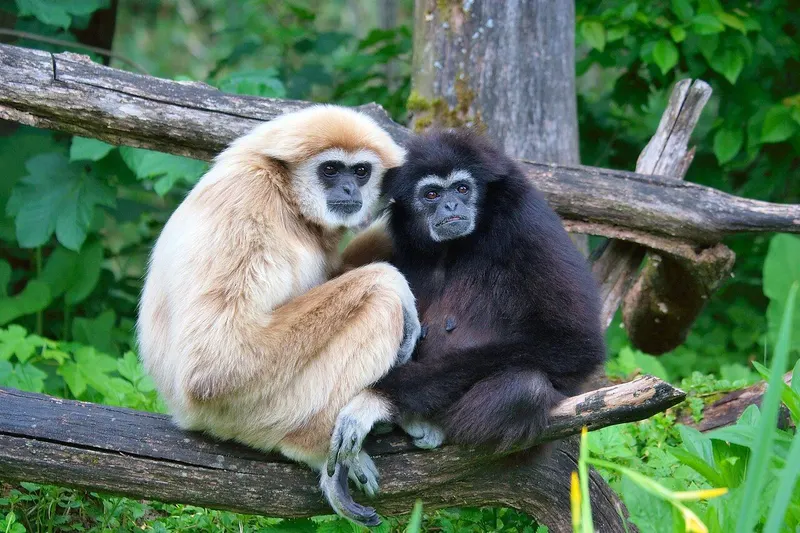
Yes: the IUCN lists it as Endangered. It is sometimes hunted for its meat, or a parent is killed to capture young animals for pets, but the most pervasive threat is loss of habitat. Its fur varies from black and dark brown to light brown and sandy colours; the hands and feet are white, and a ring of white hair surrounds the black face.
All 71 threatened animals ›