Where does the African buffalo live?
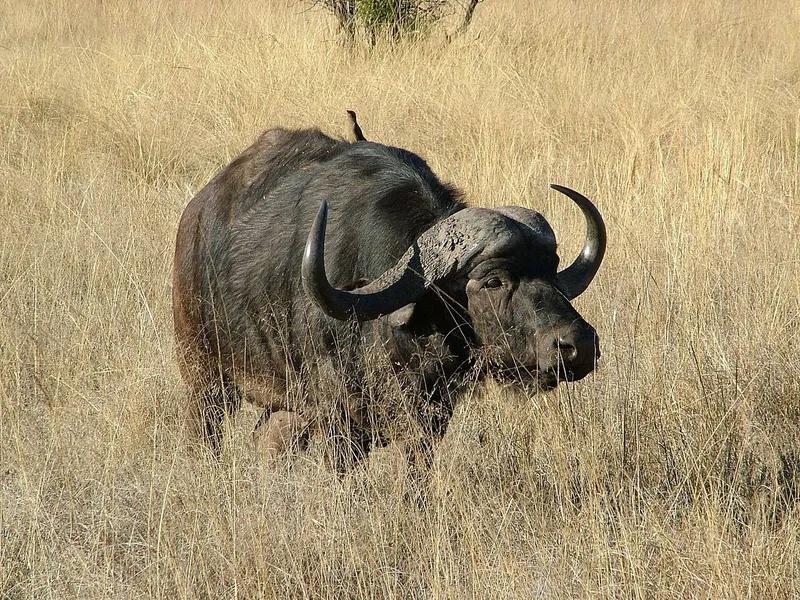
The African buffalo is a large bovid native to sub-Saharan Africa. Four subspecies are recognised: the Cape buffalo, the West African savanna buffalo, the Central African savanna buffalo and the African forest buffalo. It occurs in a variety of habitats: woodlands, savannas, forests, grasslands, shrublands and wetlands. It is a heavily built animal with a broad head and torso, a strong neck and large horns, with a bony plate or "boss" between the horns of males.
What does the African buffalo eat?
It is a ruminant grazer, primarily feeding on grass and dietary fibre. It is a social animal, forming herds ranging in size from a few individuals to over a thousand members. Its fur ranges in colour from rusty to black, and the tail ends with a dark, hairy tuft.
Is the African buffalo endangered?
The IUCN lists it as Near Threatened. It can reach 1.7 m at the shoulder and 3.4 m in length, with horns spanning 1.5 m and a weight of 900 kg. It is one of the "big five", the five mammals once feared and respected by African hunters. A rinderpest outbreak killed 95% of the population in the late 19th century. About 398,000 to 401,000 mature individuals remain. The lion is its major predator.