Where does the takin live?
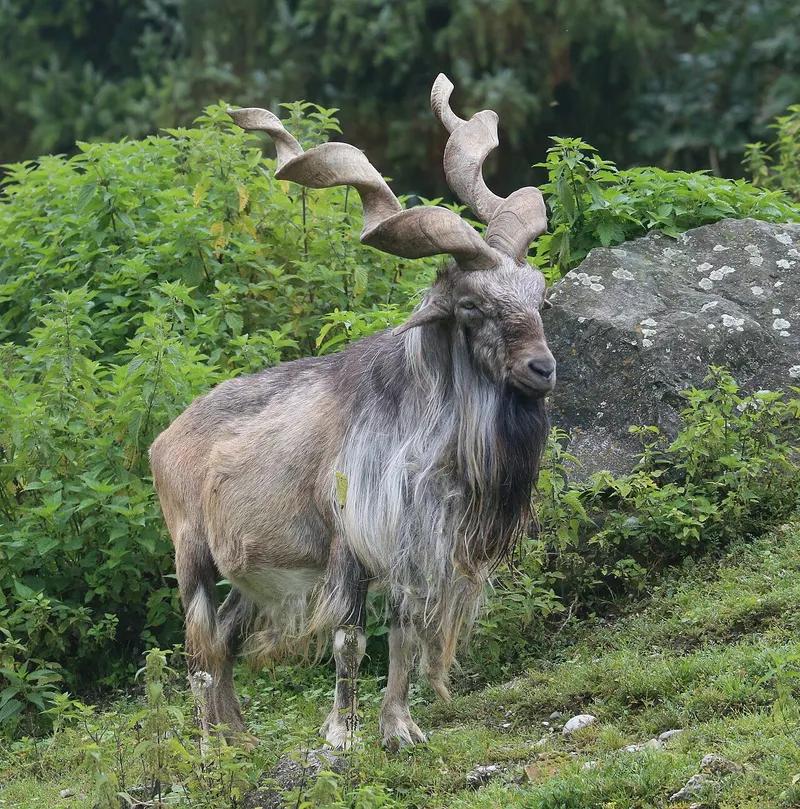
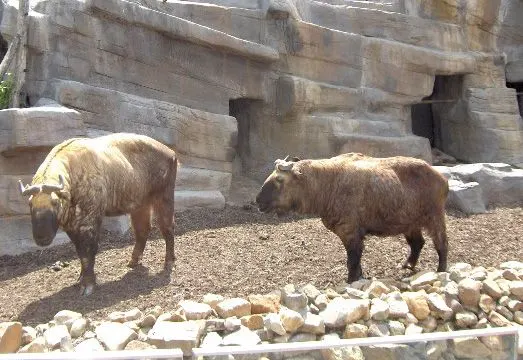
The takin is a large ungulate of the eastern Himalayas and the mountains of south-western China. It lives from forested valleys to rocky, grass-covered alpine zones, at altitudes between 1,000 and 4,500 m. It is the national animal of Bhutan. It looks like the muskox, but more recent research shows a closer relationship to sheep: the resemblance is an example of convergent evolution.
What does the takin eat?
It grazes on a variety of leaves and grasses, as well as bamboo shoots and flowers. It stands on its hind legs to feed on leaves over 3.1 m high. Salt is important: groups may stay at mineral deposits for several days. It lives in small family groups of around 20 individuals, and in summer herds gather up to 300 individuals on mountain slopes.
Is the takin endangered?
Yes: the IUCN lists it as Vulnerable. It is threatened by overhunting and habitat destruction. Takin horns appear in the illegal wildlife trade: 89 horn sets were observed in Myanmar markets between 1999 and 2006. It secretes an oily, strong-smelling substance over its whole body, which lets it mark objects such as trees.
All 71 threatened animals ›