Where does the North Sulawesi babirusa live?
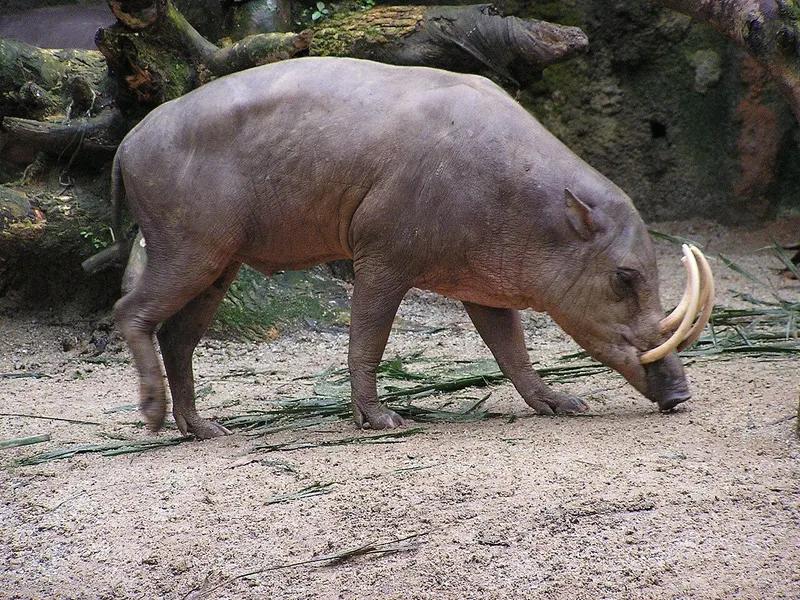
The North Sulawesi babirusa is a pig-like animal native to Sulawesi and some nearby islands (Lembeh, Buton and Muna) in Indonesia. It lives in the underbrush of tropical forests and canebrakes, and on the shores of rivers and lakes. Its name comes from the Malay babi, "pig", and rusa, "deer", in reference to the huge tusks of the male, suggestive of a deer's antlers.
What does the North Sulawesi babirusa eat?
The diet of the babirusa includes leaves, roots, fruits and animal material. Its strong jaws can crack hard nuts. It has two pairs of large tusks made of enlarged canine teeth: the upper canines penetrate the top of the snout, curving back toward the forehead. The tusks of adult males are used in fighting between males. Groups of females and young may number up to 84 individuals, and males typically live alone. The litter size is usually one or two piglets.
Is the North Sulawesi babirusa endangered?
Yes: the IUCN lists it as Vulnerable, and it is on CITES Appendix I. It is protected by Indonesian law, but threatened by illegal hunting and deforestation. It weighs up to 100 kg and has a head-and-body length of 85 to 110 cm.
All 71 threatened animals ›