Where does the dhole live?
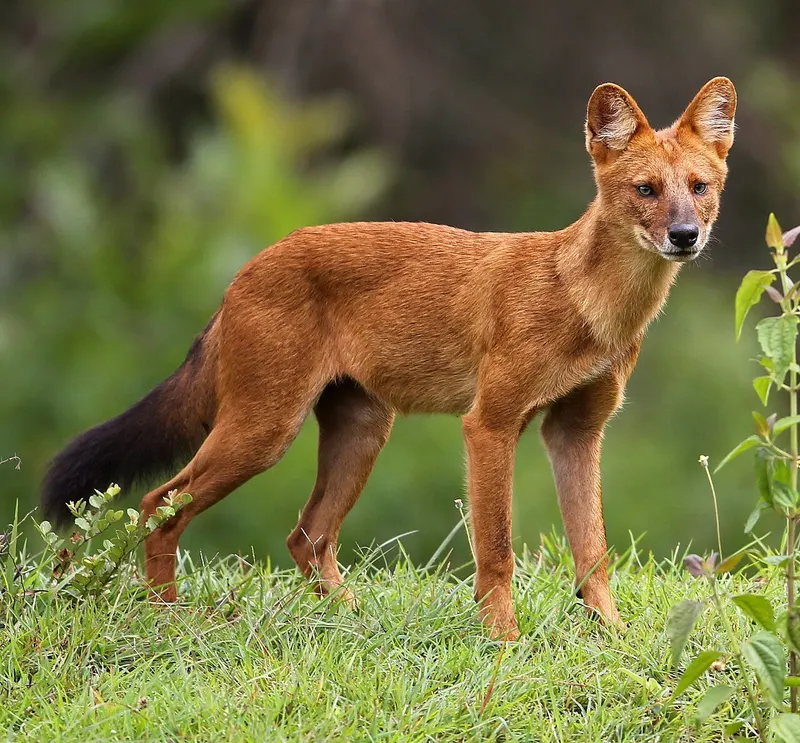
The dhole is a canid native to South, East and Southeast Asia. During the Pleistocene it ranged throughout Asia, and into Europe, but became restricted to its historical range 12,000 to 18,000 years ago. It is now extinct in Central Asia, parts of Southeast Asia, and possibly the Korean Peninsula and Russia. It is not a wild dog in the strict sense: it belongs to a genus of its own, of which it is the only member.
What does the dhole eat?
It is a diurnal pack hunter that preferentially targets large and medium-sized ungulates: chital, sambar, muntjac, wild boar, gaur, water buffalo, nilgai. It frequently drives its prey into water and can chase it for many hours. It also eats fruit and vegetable matter more readily than other canids. It is highly social: clans typically number 5 to 12 individuals in India, though clans of 40 have been reported.
Is the dhole endangered?
Yes: the IUCN lists it as Endangered. Fewer than 2,500 mature individuals remain, declining. The threats are habitat loss, prey depletion, competition with other species, persecution over livestock predation, and disease transmitted by domestic dogs. An adult weighs 10 to 21 kg and measures 88 to 113 cm.
All 71 threatened animals ›